
Managed Static Outbound IPs for n8n Workflows
Give selected n8n requests a stable identity your clients can allowlist. Keep building automations while QuotaGuard handles the proxy infrastructure, monitoring, maintenance, and failover. Choose shared static pairs or Enterprise dedicated infrastructure when the addresses must belong only to your organization.
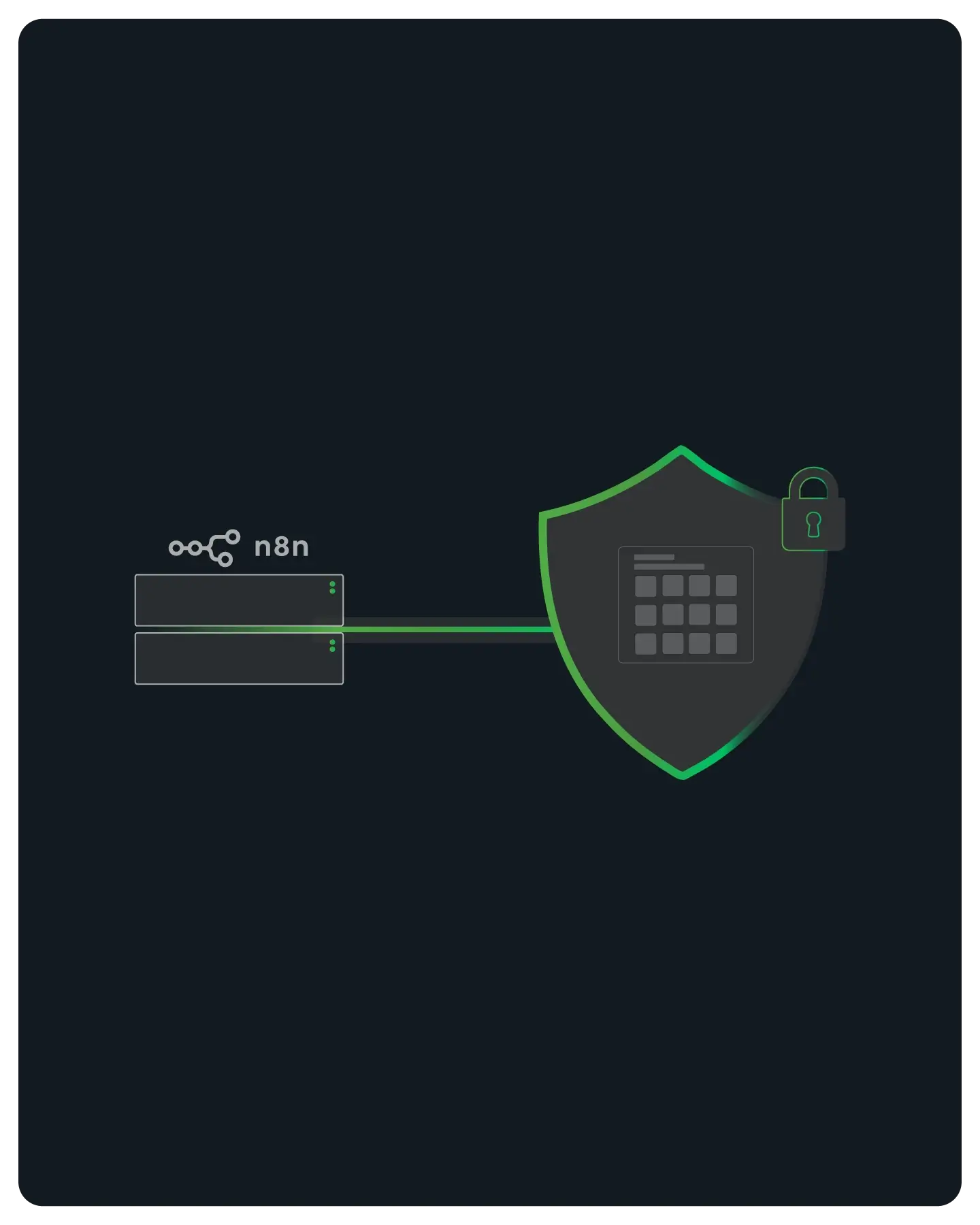
Keep Building Workflows. Let QuotaGuard Operate the Exit.
Keep your automation on n8n Cloud instead of operating a server just to obtain a fixed IP. QuotaGuard provides a load-balanced pair, selective routing, and engineering support. Your team owns its workflows; QuotaGuard owns the managed proxy infrastructure. The same subscription can serve supported clients outside n8n, keeping your outbound identity independent of one automation platform.

Security Controls That Match Your Architecture
Use a stable source-IP rule alongside TLS, application authentication, and least-privilege authorization. QuotaGuard supports that layered design; neither a static address nor a product subscription makes the whole workflow compliant.
Outbound HTTPS Payloads Stay Encrypted
Both Static and Shield can carry outbound HTTPS without decrypting the application payload. Static uses unencrypted HTTP proxy protocol for the customer-to-proxy CONNECT request and proxy authentication. Shield adds TLS to that hop while leaving the separate application TLS session intact. Use a client or relay compatible with the selected proxy protocol; a plain HTTP proxy field does not by itself prove support for Shield's TLS-wrapped connection. See QuotaGuard's data flow.
Regulated Workloads Need an Approved Configuration
Choose Shield when your security architecture requires TLS on the proxy hop. For regulated workflows, review the complete path, access controls, and required agreements with engineering. BAA review is available for approved Shield configurations; coverage and compliance are not automatic.
Connection Metadata, Not HTTPS Payload Inspection
QuotaGuard records operational connection metadata with a 60-day retention period; it does not decrypt outbound HTTPS application payloads. Account, billing, and aggregate usage records have separate handling. Review the data-flow documentation rather than treating “no payload inspection” as “no logs or retained data.”

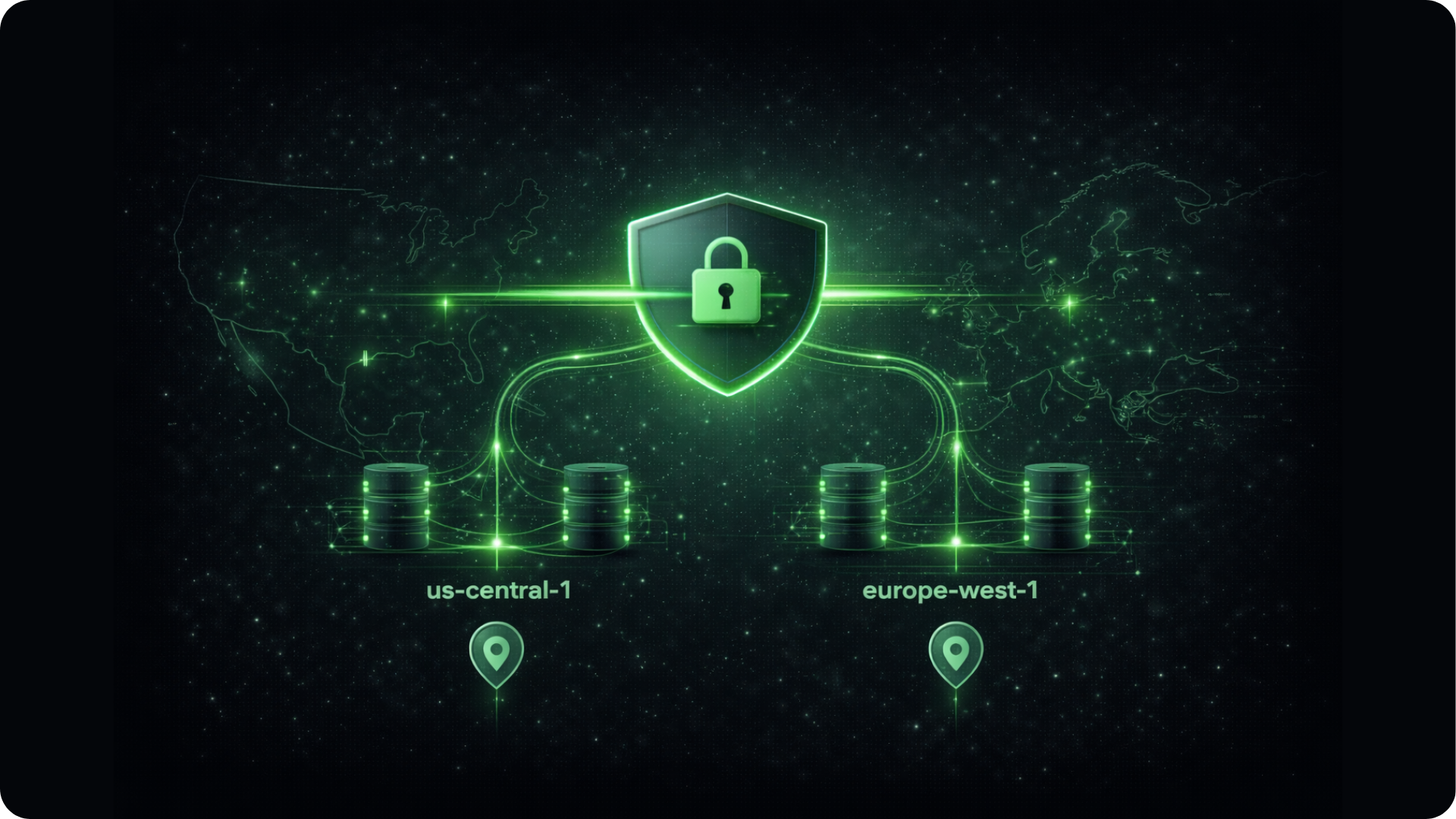
Dedicated Identity and Regional Placement
Choose the identity and operational model your client requires without taking on proxy-server maintenance. Separate the questions of address exclusivity, proxy region, application permissions, and data handling.
FAQs
Answers to your technical questions about securing n8n egress traffic.
No. HTTP_PROXY, HTTPS_PROXY, and ALL_PROXY affect software that honors them; NO_PROXY defines bypass destinations for supported clients. The HTTP Request node's own Proxy setting takes precedence. Check the nodes you actually use, and configure a separate supported route for native TCP traffic.
Yes. Configure the Proxy option on the HTTP Request node calling that API. Unrelated nodes keep their existing route unless separately configured. Protect the proxy URL as a secret and remove credentials from shared workflow exports.
Yes, selected HTTP Request nodes can use the documented HTTP Proxy option with QuotaGuard Static. Other nodes need their own compatible proxy controls or an HTTPS relay. For Shield, confirm support for its TLS-wrapped proxy connection or use a compatible customer-controlled client. Managed Cloud does not give every native node the same networking controls as self-hosted n8n.
Yes, using a supported client or tunnel route on infrastructure you control, or an authenticated HTTPS relay that opens the database connection through QuotaGuard. Keep database TLS and scoped credentials. The database endpoint must be reachable from the proxy; this does not create a private-network path or add SOCKS support to n8n Cloud's native database node.
No. It provides a stable source identity for authorized application traffic, not a rotating residential proxy pool or a guarantee of access to protected consumer sites. For a legitimate integration, have the destination approve the source addresses and retain its application security controls.
Choose a region appropriate to your workflow and destination, then measure the actual route. QuotaGuard operates in 12 AWS regions. There is no universal less-than-20-millisecond overhead guarantee for every workflow and destination.
Configure a temporary HTTP Request node for https://ip.quotaguard.com with the same Proxy setting. The response should match either assigned address; the destination must allowlist both. Use n8n execution details and destination logs to investigate application errors. QuotaGuard's connection metadata does not reveal an HTTP 403 encrypted inside a blind HTTPS tunnel. See our 403 diagnosis guide.
Use separate application credentials and permissions for production and development. If distinct source identities are also required, ask engineering to arrange the right infrastructure. Separate subscriptions or users do not automatically create different shared IP pairs, and IP separation alone does not prevent a workflow from writing to the wrong database.
Still have questions?
Talk to QuotaGuard engineering about your n8n node, destination, and source-IP requirement. We can help you choose the supported route and identity model. Do not send passwords or unredacted workflow exports.
Ready to Get Started?
QuotaGuard Static
QuotaGuard Shield
Trusted by Engineering Teams Everywhere
Reliability Engineered for the Modern Cloud
For over a decade, QuotaGuard has provided reliable, high-performance static IP and proxy solutions for cloud environments like Heroku, Kubernetes, and AWS.
Get the fixed identity and security your application needs today.